Why Your Toilet Keeps Running
A toilet keeps running when one of three parts lets it down: a fill valve that never closes, an outlet seal leaking into the pan, or a fill level set above the overflow. Naming the fault is the whole game, because each one has a different fix and a different owner under Queensland law.
If we're late, $100 comes off your bill

- Licensed and InsuredEvery job done by a licensed plumber. QBCC No: 15024607
- Fixed Quote FirstFlat-rate pricing, agreed before any work starts
- Lifetime Labour WarrantyBacked by our Fix-It-or-It's-Free guarantee (T&Cs apply)
- $0 Call-Out FeesNo extra charge for nights, weekends or public holidays

This guide sets out the causes, a colour test you can run tonight, and the QBCC rules on which cistern parts a householder may legally touch. Everything beyond those parts belongs to a licensed plumber from our team, which covers Woody Point and the neighbouring suburbs on the same run.
Cottages near the Gayundah Coastal Arboretum and unit blocks across the headland carry cisterns fitted across five decades of building, so we see every one of these faults regularly.
Why the Cistern Never Stops Filling
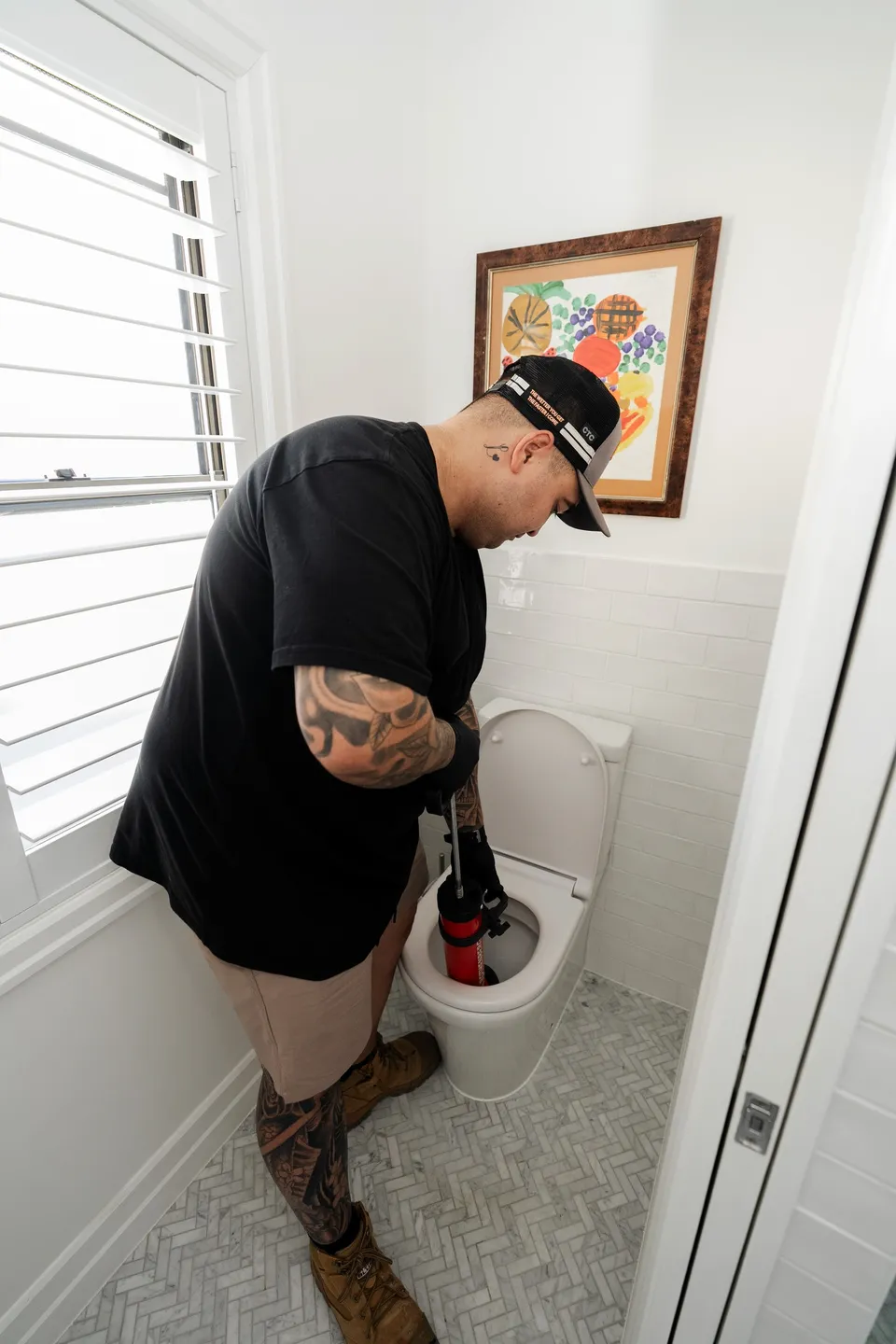
Three faults fill the list: an inlet valve that will not shut off, a flush valve seal leaking water into the pan, or a water level above the overflow. Two parts do the work, so it helps to know what each one is.
The inlet valve tops the cistern back up after a flush and closes once the float hits its mark. The flush valve, also called the outlet valve, is the opening at the base of the cistern that releases water into the pan when you press the button.
Each fault announces itself in its own way:
- Hissing or trickling that carries on after the refill points at a fill valve failing to close.
- The cistern topping up in bursts, with no button press, or a damp streak running down the pan, points at the outlet seal.
- A steady run or drip at the overflow, including the pipe on an outside wall, means the cistern is filling past its level.

Water Runs but the Cistern Stays Low
A cistern sitting low or empty usually means the inlet valve is past its best or blocked, the stop tap has been knocked partly closed, or the float is sitting low. Check the stop tap first, because a handle half shut starves the valve of supply.
There is a twist worth knowing. If water runs hard but the level never climbs, the outlet seal may be releasing it down the pan as quickly as the valve lets it in, so the cistern cannot hold anything.
A slow fill has its own tell. Where the inlet valve is at fault, you will hear a weak trickle and watch the level creep up over a long stretch rather than never arriving.
What Colour in the Bowl Tells You
- 1

Add the colouring
Drip a splash of food colouring into the cistern and set the lid back. Do not flush, and keep everyone off the button while the test sits.
- 2

Watch the bowl
Colour showing up in the bowl tells you water is escaping past the outlet seal, even though nothing has been flushed. That is your leak, and it is a silent one.
- 3
Read a clear result
An empty bowl points you back to the inlet side instead: the valve itself and the fill level. The outlet seal is doing its job, so the fault sits upstream of it.
- 4

Flush it clean
Once the test is read, flush the colour away. Food dye does not mark porcelain, so the test costs nothing and leaves nothing behind. No food colouring in the house? Press a dry square of loo paper against the rear of the bowl, above the waterline. The paper should stay dry on a sound loo; dampness means a trickle is running down behind you.
Plumbing job in Woody Point?
$0 call-out fees, available 24/7, and same-day where we can.
The QBCC List of Unregulated Cistern Work
The QBCC treats three cistern parts as unregulated work a householder may tackle:
- the washer on the drop valve
- the washer on the float valve
- the rubber suction cup
Anyone with the right knowledge and skill can do that work without a licence, an approval or a report, though the finished job must still reach the standard the plumbing laws require.
Everything else inside a cistern is minor work, done by a QBCC licensee with no permit and no Form 4 needed. We handle those repairs daily, including the valve and seal swaps that sit behind most running loos.
Rentals follow their own line. Queensland tenancy law requires the owner or manager to keep a rental in good repair, and the tenant to report faults promptly. A loo that is blocked or broken sits on Queensland's emergency repairs list, but a running cistern does not, so it counts as routine and should be fixed within a reasonable time.
What a Running Cistern Does to Your Water Bill
No, Unitywater's concealed leak adjustment leaves out water lost through running cisterns, along with dripping taps and hot water systems. The property owner is primarily responsible for leaks on their land and for the water those leaks waste.
That matters here more than in most suburbs. At the last census, 33.9% of dwellings here were flats or units. Plenty of running cisterns get reported by tenants while the usage charge lands on the owner's account.
A cistern running around the clock does not pause for anyone. The sooner the fault is named and fixed, the smaller the figure on the next bill.
When to Call a Plumber
Ring us when the colour test shows a leak, when the hiss has carried on for days, or when the overflow drips onto a path or a garden bed. Tenants should report a running cistern the day they notice it, and owners should treat the repair as routine maintenance rather than an emergency.
The full repair service, from inlet valves to complete cistern internals, is on our toilet repairs page. Every job is done by a licensed plumber, and you get a fixed quote before any work starts.
Running Loo Questions Answered
Call (07) 3523 7172Why has my toilet cistern stopped filling?
An inlet valve past its best or blocked with grit, a stop tap knocked partly closed, or a float sitting low will stop the cistern filling. If water runs hard while the level stays down, the outlet seal may be letting it escape down the pan as fast as it enters.
How can I check my Woody Point toilet for a silent leak?
Drip a splash of food colouring into the cistern and leave the loo unflushed. Colour showing in the bowl after a wait tells you the outlet seal is passing water. Flush the colour away afterwards, because food dye does not mark porcelain.
Will Unitywater help with the bill for a running toilet in Woody Point?
No, Unitywater's concealed leak adjustment leaves out water lost through a running cistern. The property owner is primarily responsible for leaks and the losses they cause, so the usage charge lands with them.
What is the overflow pipe on a toilet cistern?
The overflow is the escape route that takes surplus water out of the cistern instead of onto your floor. When the inlet valve fails to close or the float is set high, water climbs to the overflow and pours out through it.

Ring Us About the Running LooWe'll call you back.
Book on (07) 3523 7172 for plumbing anywhere in Woody Point. We're available 24/7, there's no extra charge for nights, weekends or public holidays, and every job comes with $0 call-out fees.
To claim your $0 call-out fee, call (07) 3523 7172 today.